
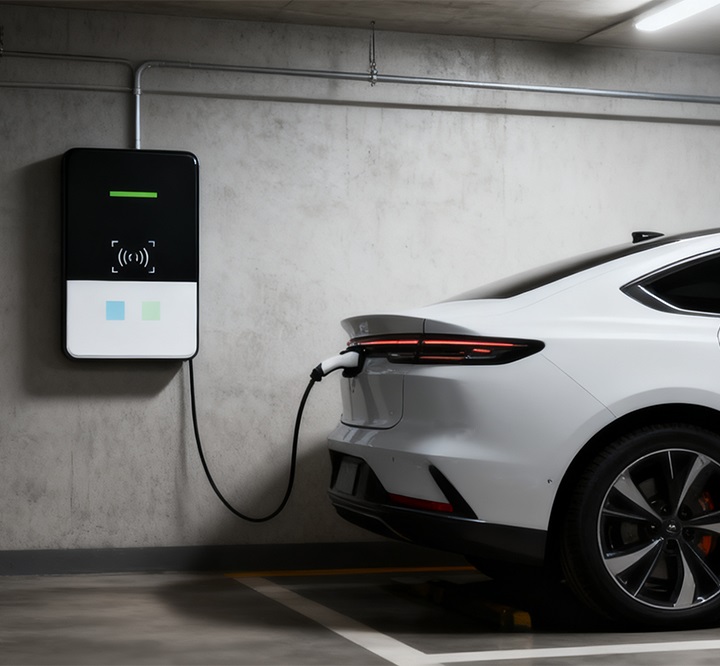
EV charging can participate in dynamic tariffs and VPP programs by allowing charging systems to adjust electricity use according to grid conditions, electricity prices, and renewable energy availability. In 2024, global EV sales exceeded 17 million units, creating a large distributed battery resource. A coordinated fleet of 10,000 EVs with 60 kWh batteries could represent around 600 MWh of storage capacity, providing flexible support for modern power systems.
Electric vehicles were initially designed as electricity consumers, but smart charging technology has changed how they interact with the grid. When thousands of vehicles charge at the same time, especially between 5 PM and 9 PM, local electricity demand can increase significantly. Studies from European smart charging projects have shown that controlled charging can reduce evening peak demand by 10%–30% by shifting charging sessions to lower-demand periods.
A vehicle connected to a smart charger does not always need to charge immediately. It can wait for a cheaper and cleaner electricity period while still meeting the driver's schedule.
Dynamic tariffs allow electricity prices to change based on supply and demand. Instead of paying one fixed rate throughout the day, EV owners can charge when electricity prices are lower, such as during periods with high wind or solar generation. In markets such as the United Kingdom, Germany, and Australia, time-based pricing programs have encouraged users to move charging away from peak hours.
A typical smart charging system evaluates several conditions before starting or adjusting charging:
| Data Considered | Example |
|---|---|
| Battery level | 30%–80% state of charge |
| Departure time | Vehicle needed at 7 AM |
| Electricity price | Hourly or 15-minute pricing |
| Renewable generation | Solar or wind availability |
| Grid condition | Local network demand |
For example, an EV arriving home at 6 PM with a 40% battery level may not need immediate charging. If the vehicle requires only 25 kWh before the next morning, the charging system can schedule power delivery during lower-cost hours between midnight and 6 AM.
The connection between smart charging and electricity markets becomes stronger when multiple vehicles are managed together. This approach forms a Virtual Power Plant (VPP), where distributed resources such as EV chargers, home batteries, and solar systems are coordinated through software platforms.
A VPP does not generate electricity like a traditional power station. Instead, it manages flexible energy resources and adjusts their operation according to grid requirements. In 2023, several European VPP projects demonstrated that aggregated residential energy devices could provide megawatt-scale flexibility from thousands of small units.
| VPP Service | EV Charging Role |
|---|---|
| Demand response | Reduce or delay charging during peak demand |
| Frequency regulation | Adjust charging power within seconds |
| Renewable balancing | Absorb excess renewable electricity |
| Energy scheduling | Charge during lower-price periods |
A single EV charger may only adjust several kilowatts of power, but aggregation creates a much larger resource. For example, 5,000 EVs each providing 7 kW of adjustable charging capacity could offer approximately 35 MW of flexible power.
This flexibility becomes more important as renewable energy increases. Solar generation often reaches its highest level during midday, while household electricity demand may peak in the evening. Smart charging can move electricity consumption toward renewable generation periods instead of increasing fossil fuel-based generation.
In California renewable energy programs, flexible electricity demand has been used to absorb excess solar generation and reduce evening grid pressure.
Bidirectional charging adds another function by allowing electricity to flow from the vehicle battery back to a home or the grid. Vehicle-to-Home (V2H) systems can supply household electricity during high-price periods or outages, while Vehicle-to-Grid (V2G) systems allow aggregated EV fleets to provide electricity services.
A bidirectional charging system requires special hardware because standard chargers only deliver electricity in one direction. Products such as the ESYsunhome bidirectional DC charger are designed for applications where EV batteries can exchange energy with external systems.
The technical requirements for bidirectional charging include:
-
Compatible vehicle battery systems
-
Bidirectional power conversion equipment
-
Communication between charger and energy management platform
-
Battery protection controls
-
Grid safety compliance
Battery aging is often discussed in relation to V2G operation. Research published between 2018 and 2024 indicates that controlled charging and discharging strategies can limit additional battery wear by avoiding frequent operation at very high or very low battery levels.
A battery operating between approximately 20% and 80% state of charge generally experiences less stress compared with repeated full charge and full discharge cycles. Fleet operators can also set charging limits to protect battery performance while providing grid services.
The financial model for EV participation depends on electricity market design. Some programs provide lower electricity prices, while others offer direct payments for allowing controlled charging or energy export.
| Participation Method | User Benefit |
|---|---|
| Time-of-use charging | Lower electricity cost |
| Demand response | Program payments |
| V2G services | Additional compensation |
| Home energy management | Better electricity scheduling |
Several pilot programs have measured economic improvements. In some European projects, smart charging reduced charging expenses by approximately 10%–25% compared with uncontrolled charging patterns.
However, user participation depends on simple operation and reliable service. Drivers usually need their vehicles ready at specific times, so charging systems must respect personal schedules.
A practical smart charging platform usually includes:
-
Vehicle information collection
-
Electricity price analysis
-
Charging schedule optimization
-
Automatic charger control
-
User preference management
Communication standards also influence the expansion of EV-based VPP programs. Protocols such as ISO 15118 and Open Charge Point Protocol (OCPP) allow vehicles, chargers, and energy platforms to exchange information more efficiently.
Interoperability remains important because EV owners may use different vehicle brands, charging networks, and energy providers. A common communication framework helps connect these systems without requiring completely separate solutions.
The growth of EV adoption creates a larger opportunity for grid-connected charging. BloombergNEF reported that global passenger EV stock could reach hundreds of millions of vehicles by 2030, creating substantial distributed battery capacity.
A future charging network will not only provide electricity for transportation but also support electricity management through connected energy systems.
Dynamic tariffs and VPP programs provide a practical method for using EV charging flexibility. By combining automated charging, electricity pricing signals, and bidirectional power technology, EVs can support renewable integration, reduce peak demand, and allow vehicle owners to participate in modern electricity markets.